Can Sleep Apnea Exercises Really Reduce Snoring Naturally?
Yes, targeted sleep apnea exercises can strengthen the muscles in your mouth, throat, and upper airway — making it easier to breathe at night and significantly reducing disruptive snoring or mild sleep apnea episodes.
TL;DR Summary
- Sleep apnea exercises target weak airway muscles that cause vibration (snoring) and obstruction (apnea).
- Daily jaw exercises for snoring and throat strengthening exercises can dramatically reduce snoring naturally over time.
- These methods are safe, non-invasive natural remedies for sleep apnea — perfect alternatives to CPAP machines and surgery for mild cases.
- You’ll need 15–20 minutes daily for 6–8 weeks to see noticeable results.
- Consistency is key — progress happens gradually through dedicated muscle retraining.
Benefits of Sleep Apnea Exercises
Understanding Sleep Apnea and Snoring
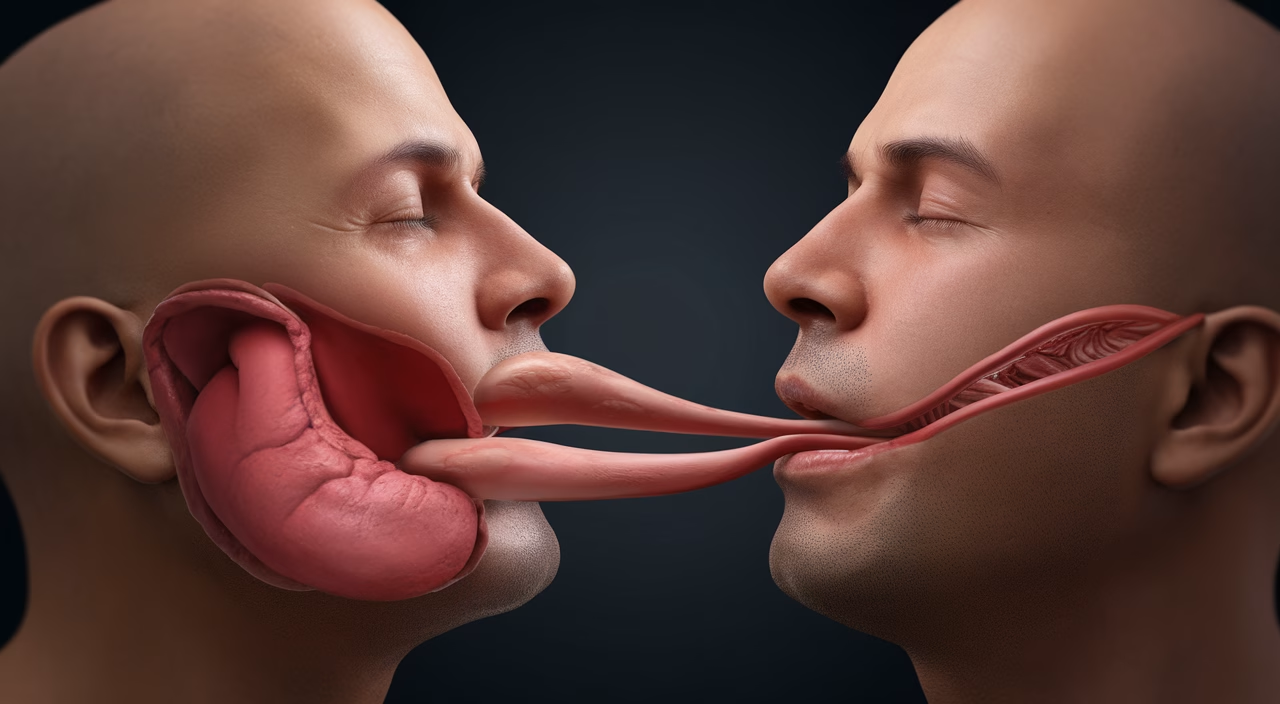
Most people think loud snoring or disrupted sleep is just “being a noisy sleeper.” But there’s often more happening beneath the surface. Obstructive sleep apnea (OSA) occurs when soft tissue in your throat and tongue muscles relax excessively during sleep, blocking your airway and causing breathing to stop temporarily. This creates gasping, restless nights, and chronic exhaustion.
Snoring is often your body’s warning signal — caused by tissue vibration as air struggles to squeeze through a narrowed passage. While not all snorers have sleep apnea, nearly all untreated sleep apnea patients do snore loudly.
How Sleep Apnea Exercises Can Help
Your mouth, throat, and neck contain dozens of muscles that directly influence your breathing quality. Over time, due to age, weight gain, or poor posture, these crucial airway muscles lose their strength and tone. But here’s the encouraging news: just like your biceps or quads, these airway muscles respond exceptionally well to targeted training.
Strengthening key areas — such as your soft palate, tongue base, and pharyngeal walls — helps prevent airway collapse during sleep. These movements are called oropharyngeal exercises. When you practice them regularly, they improve muscle tone, lower airway resistance, and reduce the frequency and volume of snoring from your very first night.
6 Effective Sleep Apnea Exercises to Try
Exercise 1: Jaw Exercises for Snoring
These jaw exercises for snoring work your masseter and temporalis muscles — the key muscles responsible for jaw stability during sleep.
How to do it:
- Sit upright and relax your shoulders completely.
- Open your mouth as wide as comfortable without strain. Hold for 5 seconds.
- Move your jaw to the right and hold for 5 seconds, then slowly to the left.
- Repeat the complete sequence 10 times daily.
You’ll develop better jaw control, which prevents your mouth from falling open while sleeping — one of the primary triggers of disruptive snoring.
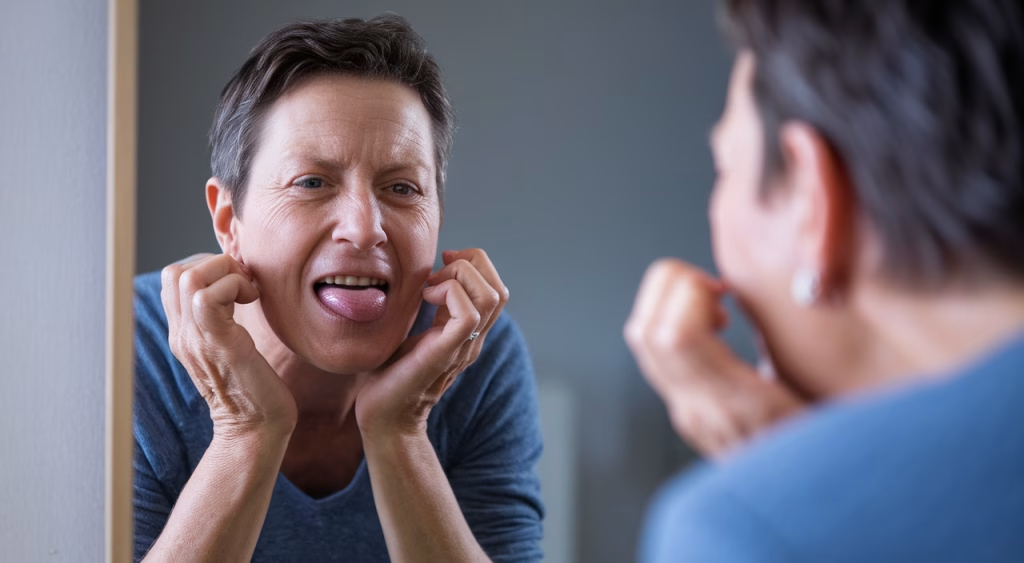
Exercise 2: Tongue Strengthening Exercises
These are among the most researched natural remedies for sleep apnea available.
Try this proven tongue routine:
- Stick your tongue out as far as possible, then gently try to touch your chin.
- Hold for 5 seconds, then try to touch your nose tip.
- Repeat 10 times in each direction.
- Advanced variation: press your tongue flat against your mouth’s roof and hold firmly for 5 seconds.
These sleep apnea exercises strengthen your genioglossus — one of your most important airway muscles — helping prevent dangerous tongue collapse during sleep.
Exercise 3: Throat Strengthening Exercises
Let’s explore powerful throat strengthening exercises that are proven to widen your pharynx and improve airflow.
Try vocalization techniques:
- Practice saying “GA” and “KA” slowly and forcefully, 10 repetitions each.
- These specific sounds activate deep throat muscles essential for breathing stability.
We also recommend the “gargle technique” — gargle water for 30 seconds after brushing your teeth each evening. This simple practice stimulates and strengthens multiple muscle groups throughout your mouth and throat.
Exercise 4: Palatal Strengthening Exercises
Your soft palate controls airflow between your nose and mouth during sleep. Weakness in this area directly leads to tissue vibrations and noisy breathing patterns.
Try the suction hold technique:
- Press your entire tongue flat against your mouth’s roof.
- Create strong suction and hold this tension for 5 to 10 seconds.
- Repeat 5–10 times per session, twice daily for best results.
This builds remarkable resilience in your palatal region and dramatically reduces tissue flapping while you breathe during sleep.
Exercise 5: Breathing Enhancement Techniques
Proper breathing isn’t just about expanding your lungs — it’s about retraining your diaphragm and optimizing your nasal airflow systems.
Try this transformative routine:
- Inhale slowly through your nose for exactly 4 counts.
- Hold your breath comfortably for 6 seconds.
- Exhale completely through your mouth or nose for 8 counts.
- Repeat this cycle 5 times, both morning and evening.
This technique dramatically increases oxygen efficiency and promotes nasal breathing — both absolutely critical for managing obstructive sleep patterns naturally.
Exercise 6: Neck Strengthening for Better Airway Support
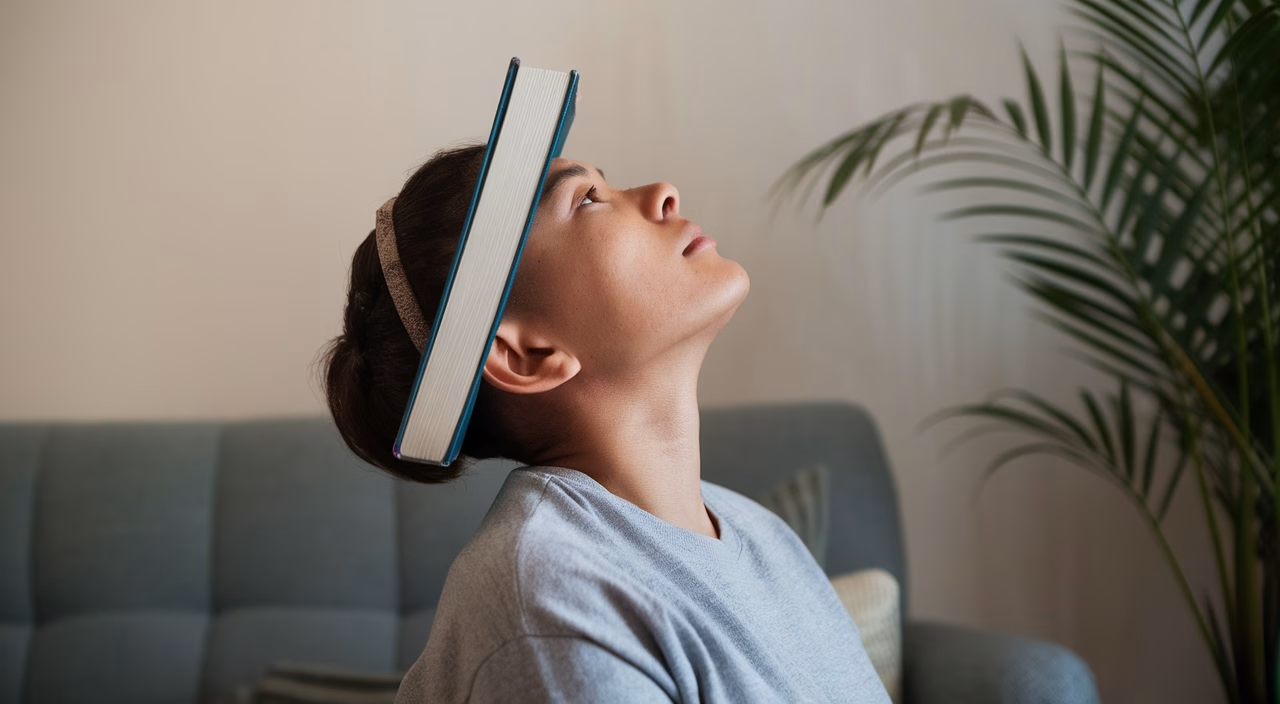
Good posture and strong neck support matter more than most people realize. A forward-tilted head position narrows your throat passage during sleep, creating increased airway friction and louder snoring.
Try this effective stretch:
- Sit up perfectly straight and gently tuck your chin toward your chest.
- Hold this position for 5 seconds, then tilt your head back as far as naturally comfortable.
- Complete 5–7 cycles while keeping your shoulders completely relaxed.
This improves both strength and flexibility in your neck muscles — actively working against gravity’s pull when you sleep on your back.
Tips for Incorporating Sleep Apnea Exercises Into Your Daily Routine
Now that you have proven tools to tackle snoring and begin retraining your airway muscles, the next crucial question is: how do you maintain consistency with these sleep apnea exercises?
Here are practical strategies to stay committed:
- Bundle habits effectively: Perform your throat strengthening exercises immediately after brushing your teeth.
- Set smartphone reminders: Commit to two focused 10-minute sessions daily.
- Start with 2–3 exercises initially, then gradually add more to avoid feeling overwhelmed.
- Track your progress consistently: Use a journal app or simple paper checklist for completed routines.
- Remember: Steady improvement, not instant transformation, is your realistic goal.
Cost Guide: What You Can Expect to Pay
| Solution Type | Price Range | Notes |
|---|---|---|
| Do-it-yourself Exercises | $0 | Free via guides like this post |
| Online Exercise Programs | $20–$60/month | Structured plans with video demos |
| Therapist-led Sessions | $70–$200/session | 1-on-1 myofunctional therapy guidance |
Conclusion
Whether you’re exhausted from being nudged awake by your partner or concerned about waking up breathless, sleep apnea exercises offer a practical, empowering path forward. Like any effective fitness plan, success comes down to consistency and intentional practice. Stick with these simple, targeted movements and you may find yourself breathing easier, sleeping deeper, and waking up far more refreshed than before — all without masks, machines, or medications. Start with these natural remedies for sleep apnea today and experience the difference that dedicated airway training can make.
Frequently Asked Questions
Can mouth exercises stop snoring?
Yes. Regularly performing mouth and throat exercises strengthens weak muscles involved in snoring and airway collapse, significantly reducing symptoms in many cases.
How long does it take to see results from sleep apnea exercises?
Typically, within 4 to 8 weeks of consistent practice, many people notice reduced snoring and improved sleep patterns.
Are these exercises effective for everyone?
They are most effective for individuals with mild to moderate obstructive sleep apnea or for primary snorers. Severe OSA cases may require additional treatment.
Do these exercises replace CPAP therapy?
No. If you’ve been prescribed CPAP for severe OSA, do not stop treatment without medical advice. Exercises can be a helpful complement but not a substitute.
Is weight loss still necessary if I do these exercises?
Exercises help muscle tone, but if excess weight is a contributing factor, combining both strategies yields better results.
What if I forget to do the exercises?
Missing a day or two won’t ruin your progress, but daily consistency delivers the best long-term impact. Setting reminders can help.
Is there an age limit to airway training?
No — folks of all ages can benefit. The key is choosing the right difficulty level and ensuring good form during each movement.